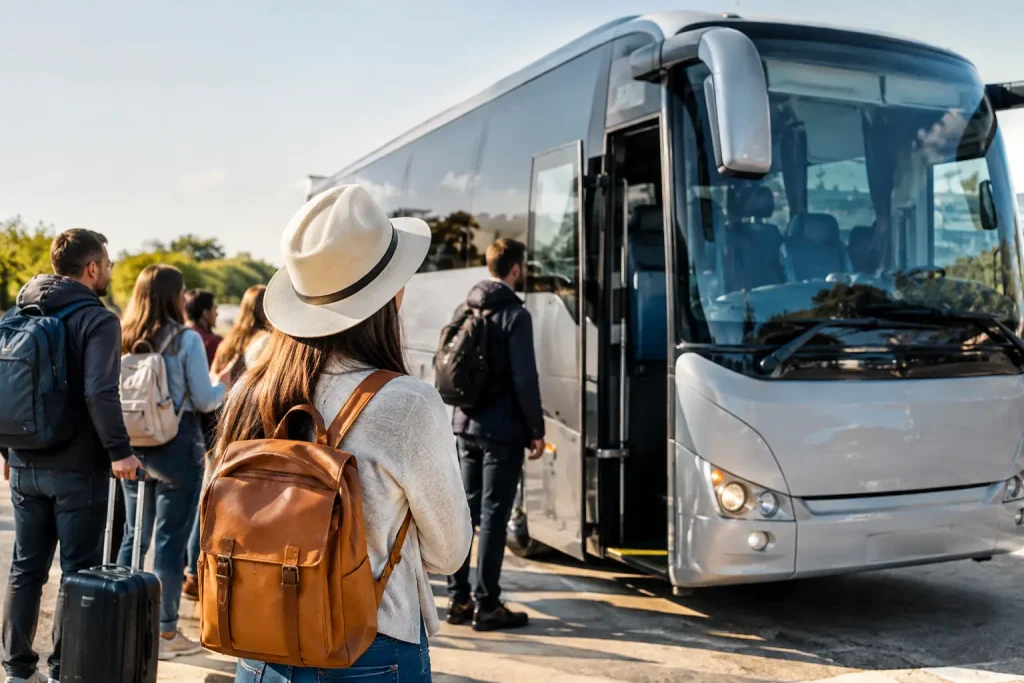
A long coach journey can be the start of a holiday, a wedding weekend, a corporate retreat or a European tour. It should not feel like something your group has to endure. The best coach features for long journeys are the details that protect comfort, keep plans running to time and give every passenger space to settle in from departure to arrival.
For organisers, choosing a coach is about more than passenger numbers and price. The right vehicle and service level can change the mood of the entire trip. A well-planned journey means guests arrive rested, luggage is handled properly and the route feels managed rather than improvised.
1. Comfortable, supportive seating
Seat quality is often the feature passengers remember most. For longer journeys, look for supportive high-back seats with sensible legroom, armrests and reclining capability. These details make a real difference on a journey of several hours, particularly for older guests, families and colleagues travelling before a full day of meetings or activities.
Reclining seats should offer comfort without making the space behind them unusable. Good coach layouts balance personal room with practical capacity, so passengers can relax without feeling cramped. Clean, well-presented upholstery also matters. It signals the level of care that has gone into the journey before the coach has even left the pick-up point.
2. Effective climate control
A coach can feel very different after two hours on the road if its temperature is not properly managed. Reliable air conditioning and heating are essential for journeys across the UK, where weather can change quickly, and especially valuable for trips into Europe during warmer months.
The aim is not simply to make the vehicle cold or warm. It is to maintain a comfortable, consistent cabin temperature for the whole group. Individual air vents are particularly useful, as passengers often have different preferences. A coach that feels fresh and well ventilated supports a calmer, more pleasant journey.
3. An on-board toilet for longer routes
For a full-day itinerary, an airport transfer with delays, or a cross-country and continental journey, an on-board toilet adds reassurance. It is especially helpful when travelling with children, older passengers or a group that needs to maintain a tight schedule.
Not every trip requires one. A short journey from Birmingham to a local venue, for example, may be better served by planned comfort stops. But when motorway traffic, border timings or long stretches between stops are possible, this feature reduces pressure on both passengers and the itinerary. It should complement sensible rest breaks, not replace them.
4. Generous and well-managed luggage space
Luggage capacity is easy to overlook until departure morning. Wedding guests may have overnight bags, corporate groups may carry presentation materials, and holiday travellers can arrive with cases, pushchairs or sports equipment. A coach needs sufficient underfloor storage for the group and the type of trip being planned.
The best arrangement is not just about having a large luggage hold. It is about loading bags carefully, keeping access organised and confirming requirements in advance. If your party is taking golf clubs, skis, instruments, mobility equipment or extra event supplies, mention this when booking. A professional transport provider can then recommend the right vehicle rather than asking passengers to travel with bags around their feet.
5. Charging points and useful connectivity
Phone charging is a small feature with a large impact. Passengers use their devices for tickets, work messages, family updates, photos and maps. USB charging points or power sockets help everyone stay prepared, particularly on an executive trip or a journey where guests will be arriving straight at an event.
On-board Wi-Fi can also be valuable, though its usefulness depends on the route and mobile signal. For corporate travellers, it can support light work and communication. For leisure groups, it allows people to stay in touch and share the journey. It is best viewed as an added convenience rather than a guarantee of high-speed coverage in every rural area or across every border.
6. Professional drivers who plan ahead
The most valuable coach feature is not always visible inside the vehicle. A professional, courteous driver brings local knowledge, safe driving standards and a composed approach when plans change. That matters as much on a corporate transfer as it does on a family holiday.
Long-distance travel requires more than following sat-nav directions. It involves suitable rest stops, realistic journey timings, legal driver breaks, access restrictions and a clear understanding of pick-up and drop-off arrangements. An experienced driver helps the group feel looked after without becoming the centre of attention.
For larger or longer-distance itineraries, driver hours must be planned responsibly. This may mean arranging a second driver or building overnight rest into the schedule. It is a practical consideration, but it is also a safety and service standard that should never be compromised.
7. Safety features and vehicle maintenance
Passengers may not ask about safety systems, but they should be central to your choice. Modern coaches are designed with features such as seat belts, stability systems, monitored braking and well-maintained tyres. More importantly, these systems need to sit behind a strong culture of inspections, servicing and professional operation.
When booking, look beyond glossy photographs. Ask whether seat belts are fitted throughout, whether the vehicle is appropriate for the route, and how the operator approaches maintenance and driver compliance. A premium journey should feel effortless because the essential work has already been done properly.
8. Accessible travel options
A thoughtful group organiser considers every passenger. If someone in your party has reduced mobility, uses a wheelchair or needs extra time to board, discuss this early. Depending on the vehicle, accessible coaches may provide features such as a wheelchair lift, designated space and practical boarding support.
Accessibility is not an optional extra added at the end of planning. It can affect vehicle selection, seating layout, luggage arrangements and the suitability of each stop on the itinerary. Early communication gives the transport provider time to make appropriate recommendations and helps every guest travel with confidence.
9. Entertainment that suits the group
Audio systems, screens and microphones can add real value on a long journey, but only when used well. A tour leader may need a microphone to share timings and points of interest. A school or family group may appreciate a film on a longer stretch. Corporate teams may prefer a quieter cabin so they can talk or rest.
This is where the purpose of the trip should guide the choice. Entertainment features are useful, but they should never come at the expense of a calm, comfortable atmosphere. For many adult groups, clean surroundings, good seating and a smooth ride are more valuable than a packed entertainment system.
10. A service that keeps the day organised
The best coach features for long journeys extend beyond the vehicle itself. Clear communication before departure, punctual arrival, a polished driver presentation and a realistic itinerary all shape the experience. The coach is only one part of the service. How the journey is managed is what makes it feel premium.
For groups travelling from the West Midlands to airports, coastal destinations, major events or European cities, timings need to account for traffic, comfort breaks and the needs of the group. A good operator will ask the right questions before confirming the booking: passenger numbers, luggage, mobility needs, pick-up points, planned stops and arrival deadlines.
At Zen Travels West Midlands, that level of preparation is part of luxury travel. Every mile should feel considered, from the cleanliness of the coach to the confidence that someone has planned for the details.
The right coach is the one that suits your people and your itinerary, not simply the one with the most features on paper. Choose comfort where passengers need rest, practical facilities where the route demands them, and a professional service that gives your group one less thing to think about.