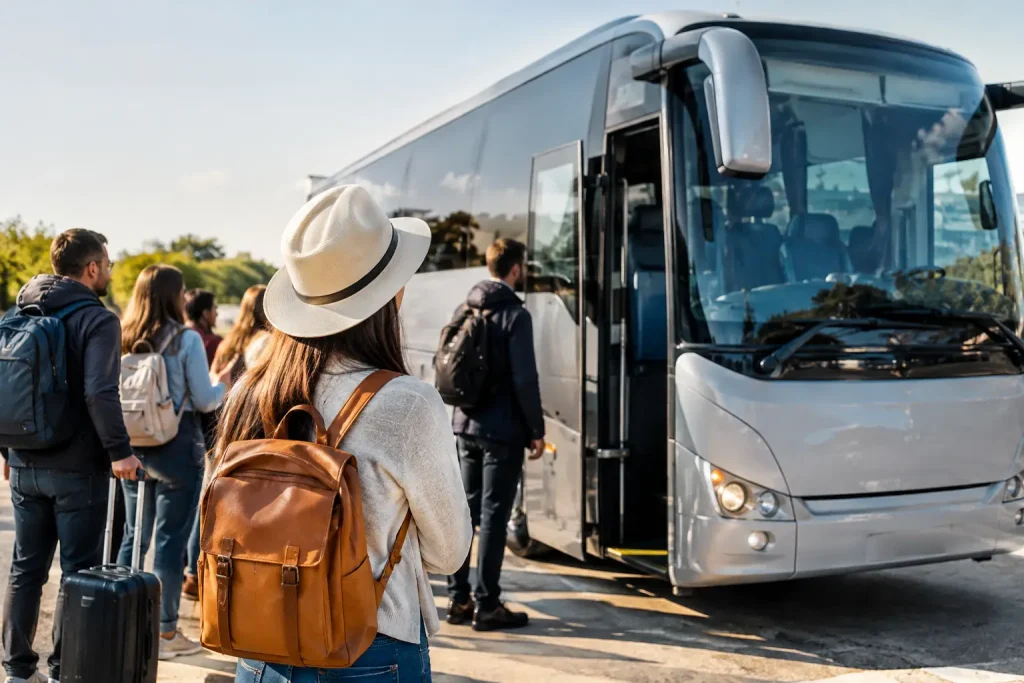
When one person misses a meeting point, the whole day can start to unravel. That is why learning how to plan group travel logistics properly is not just about booking transport. It is about protecting the experience from the first pick-up to the final drop-off, so your group arrives on time, together and in the right frame of mind.
For corporate travel, weddings, school reunions, family celebrations and private tours, the pressure usually falls on one organiser. Everyone else sees the finished itinerary. You see the moving parts behind it – passenger numbers, luggage, timings, accessibility, route changes, venue restrictions and the small delays that can become expensive if they are not anticipated. Good planning turns those variables into a clear, manageable schedule.
Start with the group, not the vehicle
The first step in how to plan group travel logistics is understanding exactly who is travelling. Headcount matters, but it is only the beginning. A group of 16 wedding guests travelling with overnight bags needs something different from 16 executives heading to a conference with briefcases and laptops. The same number of passengers can require a different vehicle, a different boarding plan and a different amount of journey time.
It helps to confirm the age range of the group, any mobility requirements, whether children are included, and how much luggage will be carried. If people are joining from different locations, decide early whether a single central pick-up point is more efficient than multiple stops. Multiple pick-ups can feel convenient, but they often lengthen the day and make timing less predictable.
For premium group travel, comfort should be planned rather than treated as a bonus. If the journey is long, crowded seating and limited luggage space can affect the whole tone of the trip. A spacious minibus or coach with the right layout creates a calmer experience and helps the day run more smoothly from the outset.
Build the itinerary around real timings
Most group travel problems come from optimism. Organisers often use ideal journey times, ideal boarding times and ideal traffic conditions. Real planning needs more margin than that.
A strong itinerary should include the departure window, expected boarding time, actual drive time, a buffer for traffic, and the time needed to unload at each stop. If your group is attending a wedding, conference, sporting event or airport transfer, work backwards from the fixed arrival time rather than forwards from the departure time. That one change avoids a surprising number of late starts.
Allow for the moments people forget
Groups do not move as quickly as individuals. People need time to gather, find seats, store bags, answer calls, use facilities and ask last-minute questions. Even a well-prepared group can take 10 to 20 minutes to board properly, especially if the pick-up point is busy or unfamiliar.
There is also the issue of access at the destination. Some venues have tight approach roads, loading restrictions or timed access windows. Hotels, country houses, city-centre venues and stadiums can each bring different practical limits. Checking those details in advance prevents awkward last-minute rerouting.
Choose transport that matches the standard of the trip
Transport is one of the few parts of an event or group outing that every passenger experiences directly. If it feels rushed, cramped or disorganised, people notice. If it feels comfortable, punctual and professionally managed, they notice that too.
When deciding how to plan group travel logistics, the right vehicle is about more than capacity. Think about journey length, passenger expectations and the overall purpose of the trip. A corporate team travelling to an executive event will usually expect a polished, quiet environment. A wedding party may need elegant, reliable transport that keeps the schedule intact without adding stress. A family group heading off on holiday may prioritise luggage space, comfort and a straightforward boarding process.
This is where a professional operator adds real value. You are not only hiring seats. You are securing route planning, timing management and a driver who understands the importance of punctuality and presentation. For groups travelling from Birmingham, Coventry, Wolverhampton or wider parts of the West Midlands, that local knowledge can be especially useful when navigating event traffic, city-centre restrictions or regional motorway pinch points.
Put one person in charge of communication
Large groups do not need more messages. They need clearer ones. One of the smartest ways to manage group logistics is to appoint a single organiser as the point of contact between the passengers and the transport provider.
Passengers should know five essentials: where they are being picked up, what time they need to arrive, what they should bring, who to contact if they are delayed, and what the return plan looks like. Most confusion comes from small gaps in these basics rather than major failures.
Keep instructions simple and consistent
Avoid sending long chains of updates across multiple platforms unless absolutely necessary. A concise travel note shared the day before and again on the morning of departure is usually more effective. Include the full address, a recognisable meeting point, boarding time rather than just departure time, and any venue-specific instructions.
If the group includes different households, departments or age ranges, confirm whether everyone has received the same information. Assumptions are expensive in group travel.
Plan for luggage, equipment and special requests early
It is surprisingly common for luggage to become an afterthought. Yet bags, gift boxes, exhibition materials, prams, musical instruments or sports equipment can all affect what vehicle is suitable and how efficiently the trip runs.
If the journey includes an airport transfer, ask for accurate baggage numbers rather than a rough guess. If it is a wedding, consider garment bags, decorative items and welcome hampers. If it is corporate travel, there may be presentation equipment or branded materials to transport. These details matter because they shape loading time and space requirements.
Special requests deserve the same early attention. Accessibility needs, child seating requirements, preferred pick-up order and comfort considerations should be raised at the booking stage, not the evening before travel. Premium service depends on preparation.
Have a fallback plan, even for simple journeys
The more important the event, the less room there is for improvisation. A practical answer to how to plan group travel logistics includes planning for what happens if the day does not go exactly to script.
Traffic incidents, roadworks, weather disruption and delayed passengers can affect even a short trip. The goal is not to eliminate every risk. It is to reduce the impact. Build contingency time into the schedule, keep passenger contact details in one place and decide in advance how long the group can reasonably wait for late arrivals.
For multi-stop journeys, it can be helpful to rank each stop by importance. If timings tighten, you can make better decisions quickly. For high-value events such as weddings, executive itineraries and airport transfers, it is especially wise to work with a transport partner that monitors timing closely and manages route adjustments professionally.
Why booking early usually gives better results
Last-minute arrangements can work, but they narrow your options. Better vehicles, more convenient time slots and stronger route planning are all easier to secure when you book early. This matters even more during peak periods such as summer weekends, school holidays, December events and major regional fixture dates.
Early booking also gives you time to refine the details without pressure. If passenger numbers change slightly, if a venue updates its access rules, or if the itinerary needs a second stop, those changes are easier to manage when the booking has been handled properly from the start.
For organisers, that peace of mind has real value. You are not simply reserving transport. You are reducing the number of moving parts that still need attention as the date approaches.
How to plan group travel logistics without carrying it all alone
The best group trips rarely feel heavily managed to the passengers. They feel effortless because the planning has been done carefully in advance. That usually means sharing responsibility with an experienced transport provider who can help sense-check timings, vehicle choice and pick-up arrangements before problems appear.
A good operator will ask the right questions, spot risks in the itinerary and help you make practical decisions that support the standard of the occasion. That is particularly important when the journey itself forms part of the experience, not just the route to it. For luxury coach and minibus travel, service quality is not an extra. It is part of what keeps the whole day composed.
If you are planning transport for a group, give yourself more time than you think you need, confirm more details than you think are necessary, and choose a level of service that reflects the importance of the trip. When people arrive relaxed, on schedule and well looked after, the planning has done its job quietly and well.