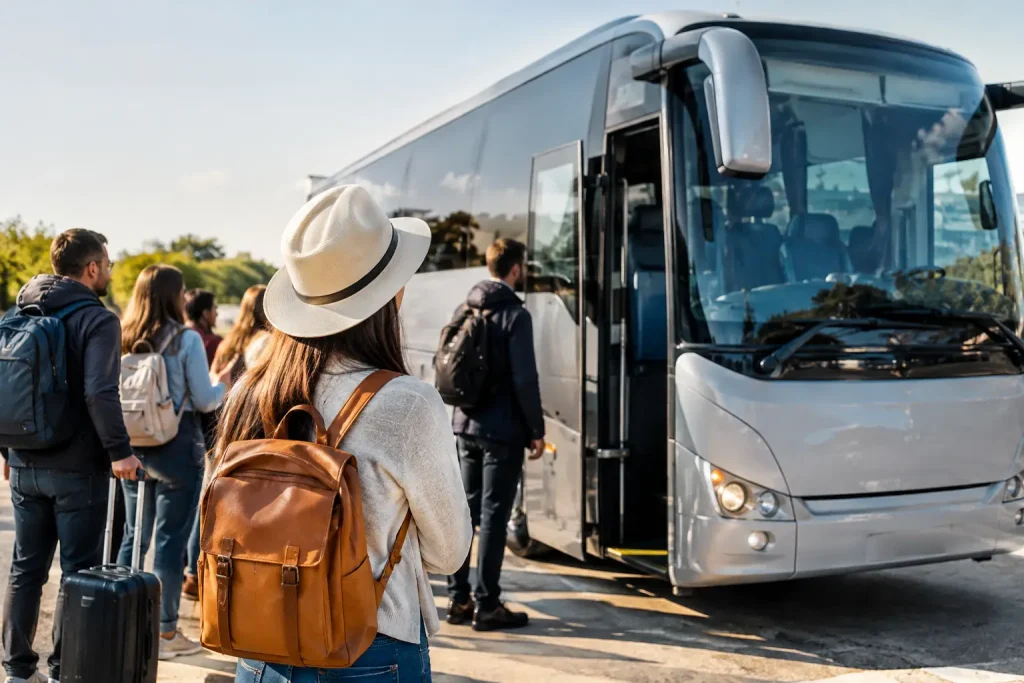
A 6.00am flight is not the moment to discover that half the party has different pickup details, the luggage will not fit, or a booked vehicle cannot accommodate everyone comfortably. For corporate teams, wedding guests, families and touring groups, premium group airport transfers turn a potentially disjointed part of the trip into a calm, well-managed start.
The difference is not simply a smarter vehicle. It is the planning behind it: a realistic collection schedule, a vehicle matched to passenger and luggage numbers, a professional driver, and clear communication before the day of travel. Whether your group is travelling from the West Midlands to Birmingham Airport, Heathrow, Manchester or further afield, those details protect the experience that matters most – arriving composed, together and on time.
What makes premium group airport transfers different?
A standard transfer gets people from A to B. A premium service considers what the group needs before, during and after that journey. It accounts for early departures, airport traffic, check-in windows, flight monitoring where required, child seats or accessibility needs, and the fact that airport luggage is rarely as compact as expected.
Comfort also matters more than many organisers initially assume. A crowded journey can feel particularly long when it begins before sunrise or follows a late-night return flight. A quality minibus or coach gives passengers suitable space, a clean and well-presented environment, and the chance to travel as one party rather than splitting into several cars or taxis.
For a business, this reflects directly on the event itself. When delegates arrive relaxed and together, the day starts with the right impression. For a wedding party or holiday group, it removes the pressure of appointing someone to coordinate multiple cars, parking, directions and changing flight information.
Start with the journey, not the vehicle
The best vehicle is not automatically the largest option. It is the one that gives your group enough seating and luggage capacity without making the journey feel unnecessarily costly or impractical. The right choice depends on party size, the route, pickup points and what everyone is carrying.
A compact executive group with hand luggage may be well suited to a premium minibus. A larger family heading on a two-week holiday, a wedding group travelling with outfits and cases, or a team carrying presentation materials may require a coach with more dedicated luggage space. It is always better to share realistic luggage expectations when requesting a quote than to estimate lightly and face avoidable complications on the day.
One pickup point or several?
A single collection point is usually the most efficient option. It keeps the schedule simple and makes it easier for the driver to build in an appropriate allowance for the airport journey. However, multiple pickups can be worthwhile when guests are spread across Birmingham, Solihull, Coventry or the wider region and gathering first would create more inconvenience than it solves.
There is a trade-off. Each additional stop adds travel time and introduces more chances for delay. A professional transport provider should help you decide whether a central meeting point, two carefully planned pickups, or a door-to-door route gives the best balance of convenience and punctuality.
Build in time that protects the group
Airport travel is governed by deadlines, but the journey should not feel like a race. Your pickup time should be based on airline check-in guidance, the airport terminal, the time of day, the route, likely traffic conditions and the time needed to load passengers and luggage.
For international flights, groups generally need more time than individuals. Even when everyone has checked in online, moving a party through bag drop, security and the terminal takes longer. Guests may also need time for coffee, currency collection, assistance or simply a moment to settle before boarding.
Return transfers deserve equal attention. Flight arrival times are only part of the picture. Passengers may need to clear passport control, collect baggage and find the agreed meeting point. A good plan allows for these variables without leaving the group unsure of what happens next.
Give passengers one clear itinerary
The organiser should not have to answer the same questions repeatedly on the morning of travel. Send passengers a concise itinerary with the pickup time, exact meeting point, airport terminal, expected arrival time and a contact number for the day.
It also helps to set expectations politely. Ask guests to be ready ahead of the stated departure time, label luggage clearly and report any significant changes as early as possible. For larger parties, appointing one group contact can make communication more efficient while allowing the driver to focus on the road and the schedule.
The details passengers notice
Luxury is often communicated through small, consistent standards rather than grand gestures. Passengers notice a vehicle that arrives on time, looks immaculate and has been prepared for the journey. They notice a courteous driver who welcomes the group professionally, handles the route confidently and understands that the first and last mile of a trip shapes the overall memory.
They also notice when they are not asked to compromise. A well-organised transfer means no squeezing cases around seats, no uncertainty about who is travelling where, and no anxious messages from people still waiting for a taxi. These are practical benefits, but they create the composed, premium atmosphere many groups want.
At Zen Travels West Midlands, the focus is on making group travel feel considered from the first enquiry to the final drop-off. That is especially valuable when the airport transfer is connected to a high-stakes occasion such as an executive event, a wedding abroad or a carefully planned family holiday.
When a private coach or minibus makes most sense
Private group transport is particularly effective when the group has a shared destination and timetable. It allows colleagues to begin conversations before a conference, lets families travel together without managing several vehicles, and makes it easier to account for every member of a tour group.
It can also be a sensible alternative to individual airport parking and multiple taxi bookings. The exact cost comparison depends on group size, distance, parking duration and vehicle requirements, so it is worth looking beyond the headline fare. One professionally managed booking may offer better value when it reduces administration, parking charges and the risk of people arriving at different times.
There are occasions when separate vehicles may be preferable, such as a very small group with widely different collection areas or passengers returning on different flights. The aim is not to force every journey into one format. It is to choose the arrangement that gives the group the clearest plan and the most comfortable experience.
Questions worth asking before you book
A premium service should make booking feel straightforward, not vague. Before confirming, ask about the vehicle capacity for both people and cases, the proposed pickup schedule, the collection and drop-off arrangements, and how changes or flight delays will be handled. If your party has mobility requirements, young children, oversized luggage or a particular need for privacy, raise it at the outset.
You should also confirm the final itinerary in writing. Names, flight numbers, terminals, collection addresses and a lead passenger contact should all be checked carefully. Small errors are easy to correct in advance and much harder to manage at an airport kerbside.
For organisers, the strongest sign of quality is often the questions a provider asks you. Careful planning is not unnecessary complication. It is how a professional service anticipates the parts of group airport travel that can otherwise become stressful.
The right transfer leaves people with more than a comfortable ride. It gives the group a confident beginning and a welcome return, with every passenger able to focus on the journey ahead rather than the logistics behind it.