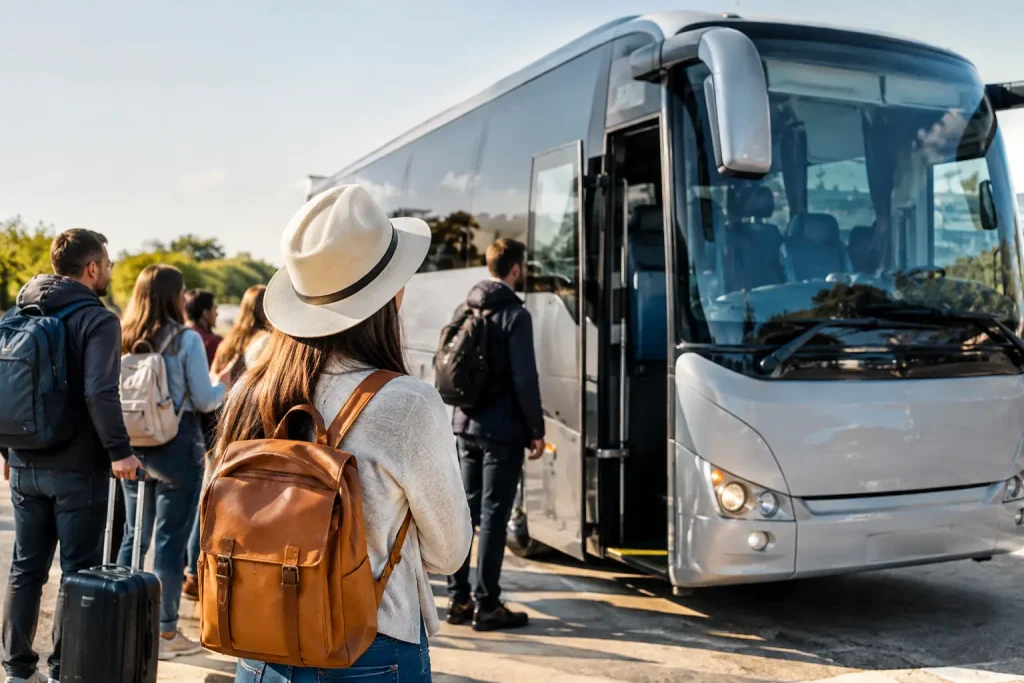
A European group holiday can be remembered for a sunrise over the Alps, a relaxed lunch in a Tuscan hill town or the ease of arriving together at a city hotel. It can also be defined by rushed connections, unclear plans and tired travellers. That is why European coach tourism trends are moving decisively towards journeys that feel considered from the first collection point to the final drop-off.
For organisers, the change is clear. Coach travel is no longer chosen solely because it keeps a group together or simplifies luggage. It is increasingly valued as a comfortable, sociable and practical way to experience several destinations without asking every traveller to manage their own route, parking, transfers and timings.
European Coach Tourism Trends: Comfort Takes Centre Stage
The modern touring group expects more than a seat and a schedule. Corporate guests, wedding parties, families and established social groups want the journey to match the quality of the occasion. Clean, well-presented vehicles, considerate drivers, sensible rest stops and clear communication all influence how a trip feels.
This matters particularly on longer European itineraries. A coach may cover several countries over a week or more, and small details quickly become significant. Is there sufficient space for luggage? Are departure times realistic? Has the hotel access been checked? Can the group pause at a suitable point rather than wherever is most convenient for the route?
Luxury in coach travel is not always about extravagance. Often, it is the confidence that the vehicle will arrive punctually, the driver will be professional, and everyone can settle into the journey without unnecessary stress. For organisers, that standard also protects the reputation of the event or holiday they have worked hard to arrange.
Slower, More Meaningful Multi-Destination Tours
European touring is gradually shifting away from itineraries that try to fit in every famous landmark. Groups still want to see Paris, Amsterdam, the Italian lakes, the Rhine Valley and other established favourites, but many now prefer fewer hotel changes and more time in each place.
A well-paced coach itinerary can make this possible. Instead of treating each destination as a photo stop, a group can allow time for a local dinner, a museum visit, independent browsing or an optional excursion. It gives travellers room to enjoy the places between headline attractions too – the lakeside town, vineyard region or historic market square that may become the highlight of the trip.
There is a trade-off. A slower programme may mean choosing two regions rather than four, particularly where driving distances are substantial. Yet for many groups, it produces a stronger overall experience. Less time spent checking in and out of hotels means more time enjoying the holiday together.
Regional routes are becoming more appealing
The most successful European tours increasingly have a clear sense of place. Rather than crossing the continent simply to collect destinations, organisers are building journeys around a region: northern Italy and the lakes, the Netherlands and Belgium, Bavaria and Austria, or the French wine regions.
This approach makes practical sense for coach travel. It reduces long transfer days, allows for more flexible touring and gives the driver and travel planner more scope to manage local access, rest requirements and group timings properly. It also works well for repeat travellers who have already visited the obvious capitals and want a more personal experience next time.
Flexibility Matters, But Structure Still Wins
Flexible travel has become a major expectation. Groups want the ability to add an extra collection point, adjust a dining stop or build free time into a city visit. They also want reassurance that someone has considered what happens if traffic, weather or local restrictions affect the plan.
However, flexibility should not be mistaken for a loose itinerary. A European coach tour requires thoughtful structure, especially when it involves ferry crossings, international borders, timed attractions, hotel check-ins and driver hours. The strongest plans create room for choice without leaving important logistics to chance.
For example, an organiser might arrange a guided visit in the morning and leave the afternoon free for guests to explore at their own pace. Or a family group may choose one base hotel for several nights, with day trips that can be adapted around energy levels and weather. The vehicle remains the dependable link between the group and the experience, while the programme feels less rigid.
Border planning deserves early attention
International travel requirements and border processes can change. Passport validity rules, entry permissions, ferry documentation and the rollout of digital border systems all need checking well before departure. This is particularly relevant for UK groups travelling into mainland Europe.
A professional transport plan should account for the time needed at ports and crossings rather than treating it as an afterthought. Travellers should receive clear guidance on documents, luggage expectations and meeting times, while the itinerary should include sensible contingency. A polished journey is rarely the result of luck. It comes from allowing enough time for the parts of travel that cannot be hurried.
Lower-Impact Travel Is Part of the Decision
Environmental considerations are influencing group travel choices, especially for corporate retreats, educational visits and organisations with sustainability commitments. A full coach can offer a practical alternative to multiple cars, reducing the number of vehicles travelling to a destination and removing the need for guests to navigate unfamiliar roads individually.
That does not mean every trip needs to be presented as a sustainability statement. For most passengers, the immediate benefits are simpler: travelling together is easier, more sociable and often less tiring. Yet when a company or group is weighing options, shared transport can support a more considered travel plan alongside those practical advantages.
The key is to be realistic. Coach travel may not suit every itinerary, especially if travellers are arriving from several distant locations or if a very small group needs complete independence. But for groups beginning in the West Midlands and travelling together through the UK or into Europe, it can bring order to a journey that would otherwise involve multiple cars, separate train bookings or complicated airport transfers.
Private Groups Want Travel That Feels Personal
The rise in private group travel is another important development. Friends organising milestone birthdays, extended families planning European holidays, wedding guests travelling to a celebration and clubs arranging cultural breaks increasingly want transport that reflects their group rather than a standard, fixed tour format.
Personalisation does not have to mean a complicated schedule. It can be as straightforward as selecting convenient pick-up points, allowing time for a special meal, accommodating luggage for a longer stay or choosing destinations that suit the age range and interests of the group. The value lies in having one coordinated journey rather than asking everyone to solve the details alone.
For corporate groups, the same principle applies with a different emphasis. Executive transport needs professionalism, punctuality and a calm environment from the outset. A well-managed coach or minibus transfer allows delegates to arrive together, avoid fragmented arrivals and begin the event in the right frame of mind.
What Smart Organisers Will Prioritise
As European coach tourism develops, the best trips will not necessarily be the busiest. They will be the ones with realistic driving days, dependable transport, carefully chosen stops and enough space for travellers to enjoy the experience.
Before confirming an itinerary, consider the group itself. A multigenerational family may need shorter touring days and easy hotel access. A corporate team may value punctual airport collections and time for informal conversation en route. A leisure group may prefer central drop-off points and free afternoons over an overfilled sightseeing programme. The right plan depends on the purpose of the journey, not just the places on the map.
For groups setting off from Birmingham, Coventry, Wolverhampton or elsewhere across the West Midlands, early planning makes a marked difference. It gives more choice over accommodation, crossings and vehicle availability, while allowing the transport schedule to be built around the group rather than squeezed in at the end.
Zen Travels approaches European group travel with that same principle in mind: luxury travel should feel calm, organised and genuinely enjoyable every mile. Choose a route with room to breathe, and the journey can become one of the best parts of the holiday.