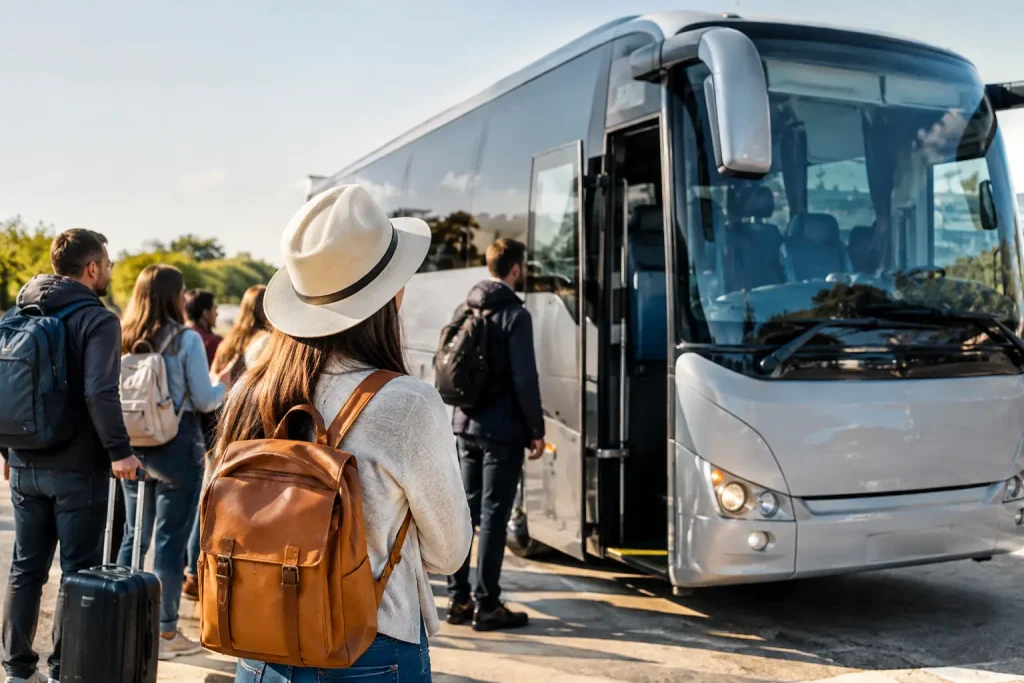
A group journey can set the tone for the entire occasion. Arrive flustered, late or separated across several cars and even the most carefully planned wedding, away day or holiday begins on the wrong note. The best ways to travel together are the ones that replace that uncertainty with comfort, clear timings and the pleasure of sharing the experience from the very first mile.
For a family celebration, corporate event or tour, travelling as one group is not simply about getting everyone to the same destination. It is about creating a calm, well-managed journey where guests feel considered, organisers stay in control and no one is left trying to find parking or catch up with the convoy.
1. Match the transport to the group, not just the headcount
The right vehicle should feel appropriate for the occasion as well as the number of passengers. A minibus can be an excellent choice for a smaller team travelling to a meeting, a group of friends heading to the races or a family day out. A luxury coach gives larger parties the room to settle in, store luggage properly and travel without feeling crowded.
Headcount is only the starting point. Think about the mix of passengers, journey length and what they will bring with them. Wedding guests in formalwear may appreciate generous space and a direct collection point. A group leaving for a week in Europe needs practical luggage capacity. For older relatives or guests with limited mobility, easy access and a comfortable seat matter more than shaving a few pounds from the booking.
Choosing a vehicle that is slightly too small often creates problems that cannot be solved on the day. A little extra room, by contrast, gives everyone space to relax and makes the journey feel suitably premium.
2. Set one clear itinerary before anyone boards
A shared journey works best when every passenger understands the plan. Confirm the collection location, departure time, expected arrival and return arrangements well in advance. If there are several pick-up points, keep them logical and avoid adding stops simply because they are convenient for one or two people. Every extra collection can affect punctuality for the whole group.
For corporate travel, build in a sensible buffer before the first meeting or presentation. For weddings, allow for photography, traffic around the venue and the fact that guests may take longer to board in formal outfits. For airport transfers, factor in check-in requirements rather than aiming to arrive at the terminal at the last possible moment.
It also helps to nominate one organiser as the point of contact. Passengers then know where to direct questions, while the driver has one person who can make a quick decision if plans need to change. That simple structure prevents a surprising amount of confusion.
3. Make comfort part of the plan
Comfort is often treated as a nice extra, yet it has a direct effect on how people arrive. A long journey in cramped conditions can leave a group tired before an event has even started. Quality seating, a clean interior, suitable temperature control and enough personal space allow passengers to use travel time well – whether that means talking, preparing for a meeting or simply enjoying the view.
This is particularly valuable when travelling from the West Midlands to destinations further afield. A day trip to London, a tour of the Cotswolds, a sporting fixture or a European itinerary can all involve several hours on the road. Rather than seeing that time as an inconvenience, treat it as part of the experience.
There is a trade-off, of course. A premium vehicle may not be the lowest-cost option on paper. But when the price is shared across the group, it can represent better value than multiple cars, rail fares, fuel, parking and the lost time spent coordinating separate arrivals.
4. Plan stops around people, not just the route
The best ways to travel together include giving people a chance to stretch, use facilities and refresh without turning the day into a series of delays. On a shorter trip, a direct journey may be the most comfortable choice. On a longer coach tour, scheduled comfort stops make the pace more enjoyable and help keep everyone in good spirits.
The ideal approach depends on the passengers. A corporate team with a fixed agenda may prefer one efficient stop. Families with children may need more flexibility. A mature tour group may value regular breaks and locations with straightforward access. Discuss this when arranging the journey, rather than relying on assumptions once you are already on the motorway.
Timing matters as much as the number of stops. A well-chosen break before congestion, or a meal stop that fits naturally into the day, feels considered. An unplanned stop caused by poor preparation feels quite different.
5. Keep luggage and special requirements visible
Luggage is one of the easiest details to overlook and one of the most important to get right. Ask passengers early whether they are bringing suitcases, prams, golf clubs, equipment, presentation materials or mobility aids. For an overnight trip, international tour or airport run, baggage requirements can change which vehicle is most suitable.
Special requirements deserve the same attention. This might include wheelchair access, additional boarding time, child seats where applicable, medication that needs to stay close at hand or a passenger who requires a front seat. There is no benefit in treating these requests as last-minute details. Raising them early allows the journey to be planned with courtesy and care.
A polished transport experience is rarely accidental. It comes from the small practical conversations that happen before departure.
6. Avoid the convoy whenever possible
Several cars can appear flexible, but they create their own pressures. Drivers have to navigate unfamiliar roads, passengers become separated at service stations, parking costs build quickly and somebody almost always arrives later than planned. For events where timing matters, that can put unnecessary strain on the organiser.
Travelling in one minibus or coach gives the group a shared timetable and a single arrival point. It is especially useful for wedding guests travelling between a ceremony and reception, teams attending an off-site event, or visitors heading to a venue with limited parking. Everyone can relax rather than assigning drivers, checking maps and managing messages throughout the day.
There are occasions when separate transport is sensible, such as a very small party with different return times. But for most organised group occasions, a single, professionally managed vehicle is the calmer option.
7. Give the journey a purpose
A shared vehicle creates time that is difficult to find once an event begins. Colleagues can make introductions before a conference. A tour leader can explain the day’s plan. Families can start a celebration together rather than meeting in stages. Even a quiet journey has value when passengers know they can sit back and leave the driving to someone else.
The key is not to overprogramme the trip. A microphone announcement or a simple itinerary may be helpful; a constant stream of instructions is not. Allow the group to use the time naturally. The service should feel attentive without becoming intrusive.
For executive groups, this may mean a composed, discreet environment. For a wedding party or leisure outing, it may mean a more sociable atmosphere. The standard of service remains the same, while the feel of the journey should suit the people on board.
8. Choose a provider that treats punctuality as hospitality
A luxury group journey is built on more than the appearance of the vehicle. It depends on a professional driver, clear communication, clean presentation and the confidence that the plan will be handled properly. Punctuality is not merely an operational detail – it is a sign of respect for every passenger’s time.
When comparing transport options, ask how the provider handles the details that affect the day: route planning, driver professionalism, luggage, timing changes and passenger comfort. The cheapest quote can become expensive if the service is unreliable or the vehicle does not match what was promised.
Zen Travels approaches coach and minibus hire as part of the occasion itself, with the care expected for corporate travel, celebrations, tours and group days out. That matters because passengers remember how they felt on the journey, not only where they went.
The most successful group trips leave people with the same impression: everything felt easy. Start with a clear plan, choose transport that gives everyone room to enjoy the ride, and let the journey become a confident beginning to the day ahead.