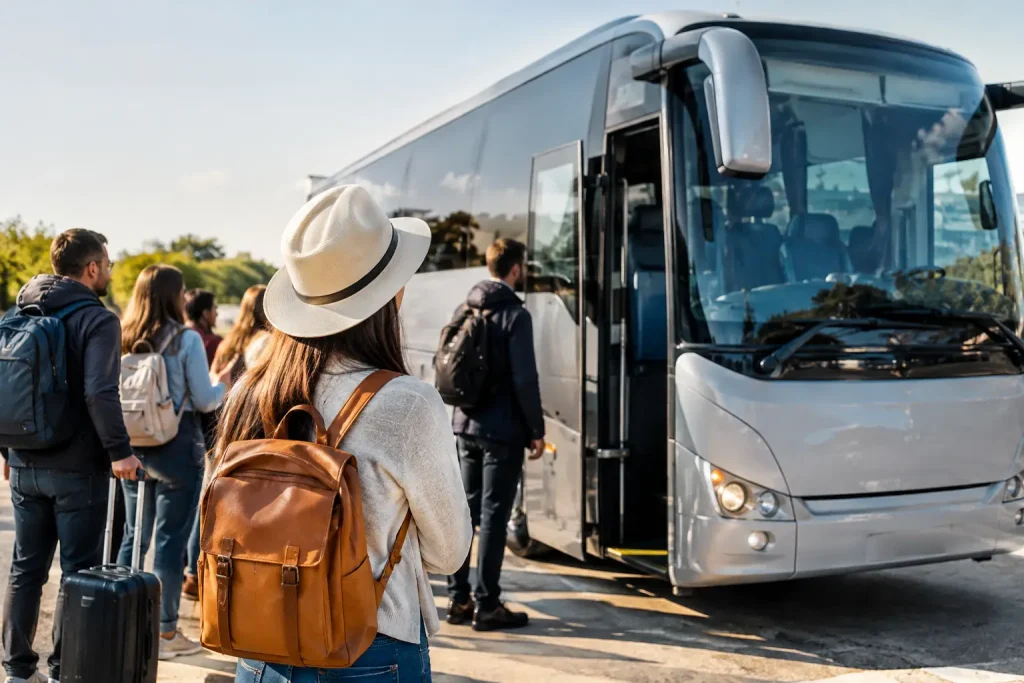
A delayed coach can affect far more than an arrival time. It can hold up a wedding ceremony, leave conference delegates missing the opening session, or turn a long-awaited day out into a stressful start. This guide to event transport planning helps organisers build a journey around the people attending, the venue requirements and the standard of experience they want to provide.
For corporate events, celebrations, tours and private occasions, transport should feel considered from the first collection point to the final drop-off. The aim is not simply to move a group from A to B. It is to make every guest feel expected, comfortable and well looked after.
Start event transport planning with the guest journey
Begin with the full guest experience rather than the vehicle alone. Ask where people are travelling from, whether they know one another, how much luggage they will have and what time they genuinely need to arrive. A coach or minibus may be the most efficient choice for the group, but the right plan depends on the journey before and after it.
For example, a wedding party may need a relaxed collection from hotels, then a precise arrival at the ceremony venue. A corporate group travelling from Birmingham to a retreat may need time to settle in, make calls or have refreshments before the agenda begins. Guests attending a concert or sporting fixture may value a clear meeting point and a dependable return journey more than anything else.
Consider mobility needs early, including walking distances at venues, assistance with luggage and sufficient boarding time. It is far easier to plan for these details at booking stage than to adjust the schedule when guests are already waiting.
Confirm numbers, collection points and timing
Passenger numbers shape every part of the arrangement. Get a realistic confirmed figure, but also decide how you will handle late additions or cancellations. Booking too small a vehicle creates discomfort and unnecessary complications. Booking substantially more capacity than needed can affect the budget, particularly where several vehicles are required.
Collection points need the same care. One central pickup can keep a journey simple and cost-effective, but it may be inconvenient for guests travelling from different areas. Multiple stops make the service more accessible, although each one adds time and introduces the risk of delays. There is no universal right answer. For a formal corporate itinerary, one or two clearly managed pickups often work best. For a family celebration, a few well-planned local stops may be worth the extra journey time.
Set a collection time that reflects reality, not just the sat-nav estimate. Allow for boarding, luggage, traffic around schools or commuter routes, roadworks and venue access. For key moments such as ceremonies, airport departures and conference registrations, arriving early is preferable to arriving exactly on time.
Match the vehicle to the occasion
Capacity matters, but comfort, presentation and journey length matter too. A compact minibus can be ideal for an executive team, wedding guests or a smaller private group. A luxury coach offers the space and group atmosphere needed for larger parties, longer tours and events where everyone should arrive together.
Think about what passengers will bring. Overnight bags, exhibition materials, sports equipment and formalwear all change the luggage requirement. A group may technically fit into a vehicle by seat count, yet still need more space for belongings. Discuss this clearly when arranging transport.
The nature of the occasion should also guide your choice. A coach for a full-day trip gives guests room to relax between activities. For an evening event, a polished vehicle and professional driver can set the right tone from the outset, while removing concerns about parking, designated drivers and navigating unfamiliar roads.
For organisers across the West Midlands, this is especially useful when guests are coming from Birmingham, Coventry, Wolverhampton or surrounding towns to a single venue. Bringing people together in one well-managed journey reduces individual travel uncertainty and makes the event easier to coordinate.
Build a schedule that can absorb real life
The most reliable itineraries include contingency time. This does not mean padding every journey without reason. It means identifying the points where delays are most likely and giving the plan room to cope.
Venue access is a common pressure point. Some hotels, country houses and city-centre locations have restricted coach access, narrow entrances or specific loading bays. Others require vehicles to arrive within a timed slot. Check where passengers can safely board and alight, whether the driver needs a separate waiting area, and who will meet the group on arrival.
A return plan deserves equal attention. Guests may leave an event at different speeds, particularly after a wedding reception, awards evening or stadium fixture. Give everyone a clear departure time and a named meeting point. If there are multiple vehicles, make sure passengers know which one they are travelling on and how it will be identified.
For events with a fixed finish, build in a sensible grace period. For occasions where timings can drift, such as receptions or outdoor events, agree in advance how waiting time and schedule changes will be handled. Clear expectations protect both the organiser and the passengers.
Communicate once, then communicate clearly
People do not need a complicated transport brief. They need the details that stop them worrying: collection location, collection time, vehicle description, journey contact and return arrangements. Send this information early enough for guests to plan, then issue a concise reminder close to the event.
If the collection point is large or busy, provide a precise landmark rather than a broad postcode. “Outside the main entrance” can be unclear at a railway station, hotel complex or exhibition venue. A specific side road, entrance name or coach bay is more useful.
The event organiser should also have one point of contact who can make decisions on the day. This person can confirm passenger numbers, manage late arrivals and receive updates if traffic conditions affect the route. It prevents drivers from having to chase multiple people for the same answer.
Ask the questions that prevent avoidable problems
Before confirming a transport provider, share the full outline of the event rather than only the dates and passenger count. A professional operator can advise more effectively when they understand the purpose of the trip, the venue and the expected experience.
Make sure you discuss the following practical points:
- Exact pickup and destination addresses, including postcodes and venue entrance instructions.
- Passenger numbers, luggage volume and any mobility or accessibility requirements.
- Required arrival time, event finish time and the latest acceptable return time.
- Planned stops, refreshments, rest breaks and any changes of venue during the day.
- Parking, waiting, access restrictions, permits or venue booking references.
- A day-of-event contact who can respond promptly if plans change.
It is also sensible to ask how changes are managed. Guest numbers can shift, flights can be delayed and event programmes can overrun. A premium service is not defined by promising that nothing will change. It is shown in calm, professional handling when it does.
Make the journey part of the event experience
Transport is often the first shared moment of an event. For wedding guests, it creates a comfortable start before the ceremony. For colleagues, it offers time to connect before a meeting or celebration. For friends and families, it means everyone can enjoy the same day without splitting into separate cars, searching for parking or worrying about the journey home.
This is where quality has a visible effect. A clean, well-presented vehicle, courteous driver and punctual arrival give guests confidence that the occasion is being properly managed. It also reflects well on the organiser, whether they are arranging a private celebration or representing a business.
Zen Travels West Midlands approaches group transport with that wider experience in mind, combining luxury coach and minibus hire with the careful organisation that events demand. The right arrangement should feel calm behind the scenes and effortless for those on board.
Leave room for the unexpected
Even the best-planned event may face poor weather, heavy traffic or a last-minute venue adjustment. Keep essential details in one accessible place, including passenger lists, contact numbers, venue instructions and the agreed itinerary. If the event is high-profile or time-critical, consider a slightly earlier departure or a secondary route.
Most importantly, do not treat transport as the final item on the checklist. Plan it early enough to shape guest communications, venue timings and the overall flow of the day. When people board a comfortable vehicle knowing exactly where they need to be and when, the occasion has already begun on the right note.