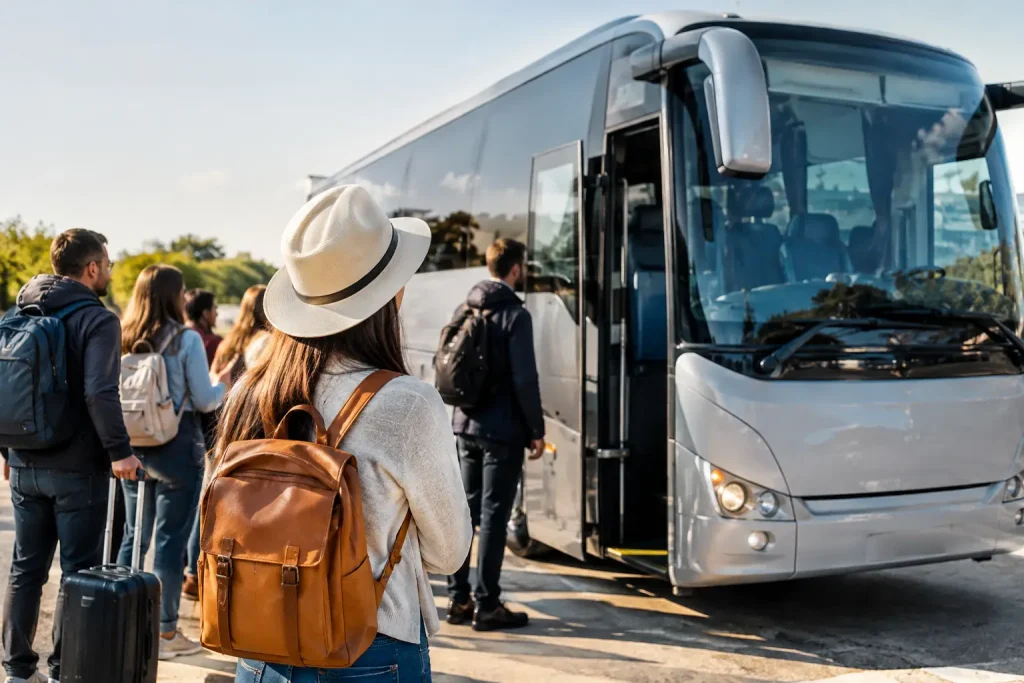
A delayed coach can change the mood of an event before guests reach the venue. For a wedding party, it can mean missing photographs; for a corporate team, it can mean a late start and a room full of distracted delegates. Knowing how to arrange event transport means treating the journey as part of the occasion, with the same care given to the venue, guest list and schedule.
Start with the event, not the vehicle
The right transport plan begins with the purpose of the day. A minibus for an executive team travelling from Birmingham to a conference needs a different approach from a coach carrying wedding guests between a hotel, ceremony and reception. Passenger comfort, luggage, journey length, collection points and the formality of the occasion should all shape the decision.
Start by setting out the non-negotiables: when guests must arrive, where they need to be collected, how many people are travelling and whether anyone has additional mobility needs. Then consider what happens after the main event. Evening finishes, multiple hotel drop-offs and return journeys are often overlooked until the final days, when choices can be more limited.
A professional transport provider can advise on vehicle capacity, but accurate information from the organiser makes that advice far more useful. Do not estimate guest numbers from an early invitation list if confirmation is still changing. Build in a sensible allowance, particularly for events where families or colleagues may decide to travel together.
How to arrange event transport around a realistic timetable
Event schedules often look comfortable on paper but become tight once guests, traffic and venue access are taken into account. Work backwards from the required arrival time and include the parts of a journey that do not show on a sat-nav estimate: boarding, loading luggage, collecting passengers at more than one point and walking from the set-down area to the entrance.
For formal events, aim for guests to arrive early enough to settle in rather than simply reach the door on time. This gives the group a buffer if the road is busy or a collection takes longer than expected. It also gives hosts and organisers room to handle small changes without creating unnecessary pressure.
Share one final itinerary with the transport provider and your passengers. It should confirm collection addresses, pick-up times, venue details, an event contact and return arrangements. If there are several stops, state the order clearly. Vague instructions such as “collect everyone around 8” invite confusion; a precise collection window and named meeting point keep the departure organised.
Plan collections to reduce unnecessary delays
One central collection point is usually the simplest choice, particularly for corporate outings, sporting fixtures and day trips. It makes headcounts easier and avoids a route becoming slow before it has properly begun. However, a central point is not always the most considerate option.
For weddings, older guests, families with young children or groups staying across several hotels, a small number of well-planned pick-ups may offer a better experience. The trade-off is time. Each extra stop needs an agreed collection time and a realistic allowance for passengers finding the vehicle, storing belongings and taking their seats.
Where a venue has restricted access, ask about coach bays, one-way systems, gate times and designated set-down points before confirming the schedule. Historic venues, city-centre hotels and busy event spaces can have rules that affect where a coach or minibus can wait. Confirming this early protects the guest experience and prevents last-minute rerouting.
Choose capacity for comfort, not just seat numbers
A vehicle that technically fits the group is not necessarily the right vehicle for the journey. Guests carrying overnight bags, exhibition materials, golf clubs or wedding outfits need appropriate luggage space. A longer journey may also call for more generous seating, climate control and a well-presented interior that allows passengers to arrive feeling composed.
Think about the profile of the group as well as its size. A compact minibus can be ideal for a board meeting, airport transfer or private family celebration. A larger coach may be the more comfortable and efficient choice for a full wedding party, school reunion or theatre group. Splitting one group between several small vehicles can work where routes differ, but it increases the chance of guests arriving at different times.
Accessibility should be discussed with care and without assumptions. If a passenger uses a wheelchair, has reduced mobility or needs assistance boarding, raise this at the booking stage. The provider can then recommend a suitable arrangement and make sure the journey is planned respectfully.
Match the service level to the occasion
Transport creates a first impression. For clients, senior colleagues and wedding guests, a clean, comfortable vehicle and courteous driver reinforce that the day has been organised professionally. For a practical shuttle between a car park and venue, the priority may be frequency and clear signage instead.
The best option depends on what guests need from the journey. There is little value in paying for features that do not suit the event, but cutting back on vehicle quality or planning can be costly if people arrive late, uncomfortable or unsure where to go. Premium group travel is often about the details guests do not have to worry about: punctual collection, a calm journey and a driver who understands the itinerary.
Confirm the details that protect the day
Before booking, make sure the quote and confirmation reflect the full plan rather than only the outward journey. Check the number of passengers, vehicle type, date, collection locations, destination, timings and return requirements. If the driver is required to wait between journeys, this should be included too.
It is also wise to discuss what will happen if the event runs late. A wedding reception, awards evening or concert can finish later than planned, while a corporate itinerary may change after a speaker overruns. Agreeing the process for amendments gives the organiser clarity if plans move on the day.
Ask who will be the point of contact for the driver. This should be a person who is available by phone, knows the schedule and can make practical decisions. For larger events, it may be useful to appoint a passenger marshal at each collection point to welcome guests, check names and alert the organiser if someone is missing.
Your final checks should cover four practical areas:
- the correct passenger numbers, including any late additions or cancellations;
- complete postcodes and venue access instructions for every stop;
- luggage, mobility or child-seat requirements where relevant; and
- a clear return time, meeting point and contact number for the group.
These details are simple, but they prevent the small uncertainties that can make group travel feel disorganised.
Keep guests informed without overloading them
Passengers do not need every operational detail, but they do need enough information to be ready. Send the transport message several days before the event, then repeat the key details the day before. Include the collection time, meeting point, expected journey time, dress or luggage guidance if useful, and the return plan.
For a large group, avoid relying on messages passed from person to person. Send information directly wherever possible. If attendees are joining from different locations, label each pick-up point clearly and make it obvious which vehicle they should board.
On the day, ask guests to arrive a little before the scheduled departure. This is particularly valuable at venues with busy entrances or limited parking. A courteous, firm approach works best: the vehicle should not leave early, but one late passenger should not disrupt an entire group without a clear decision from the organiser.
Work with a provider that understands event pressure
Price matters, but event transport should not be selected on price alone. The lowest quote may not account for waiting time, route complexity, late finishes or the level of service your guests expect. Look for a provider that asks considered questions, communicates clearly and presents realistic timings rather than making promises that depend on perfect traffic conditions.
For events across the West Midlands and beyond, Zen Travels approaches coach and minibus hire as a managed guest experience, not simply a vehicle arriving at the kerb. That distinction matters when you are responsible for colleagues, family members or valued guests.
Give your transport plan the attention it deserves early in the event process. When every guest knows where to be, the vehicle suits the group and the schedule allows breathing room, the journey becomes one less thing to manage and a far better start to the day.