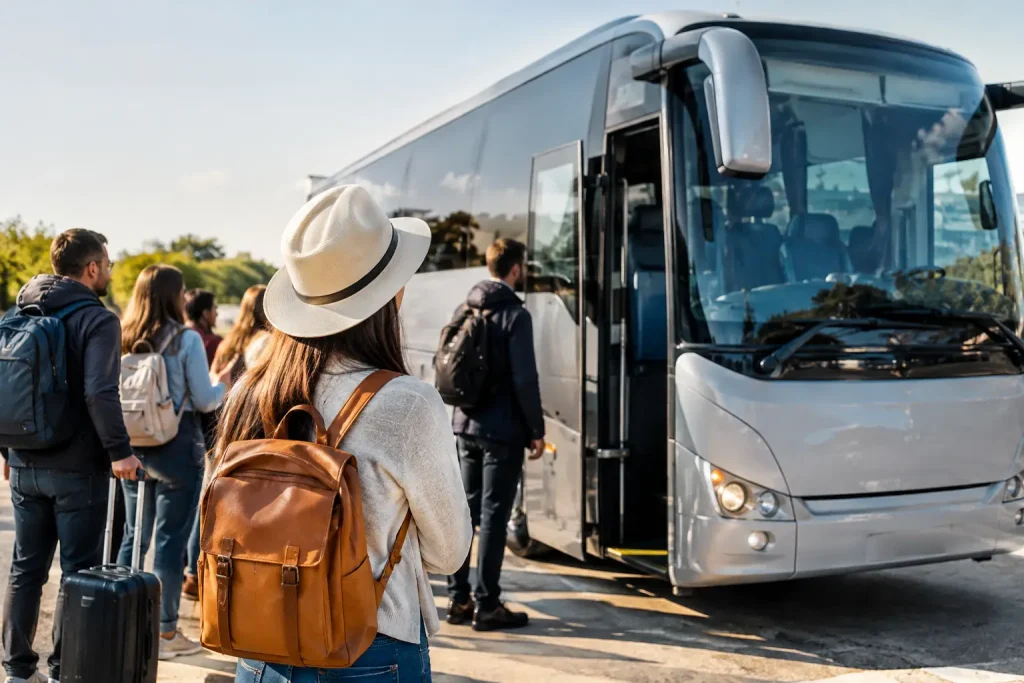
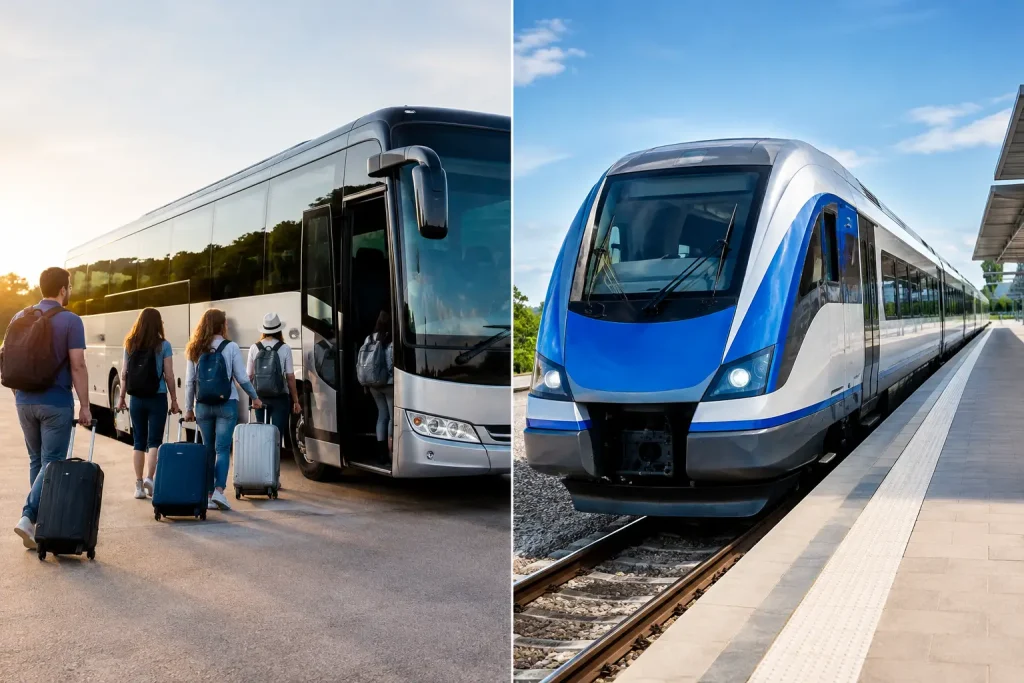
A late arrival can change the mood of an awayday before the first coffee is poured. When colleagues arrive separately, battle with parking or miss a connection, the event begins with people distracted rather than engaged. Choosing the best transport options for corporate awaydays is therefore not simply about getting from A to B. It is about giving your team a calm, professional start and a reliable journey home.
The right choice depends on group size, destination, timetable and the standard of experience you want to provide. For a small leadership meeting in central London, executive cars may be appropriate. For a full team travelling from Birmingham to a countryside venue, a private minibus or luxury coach is often the more organised and comfortable answer.
What makes transport right for a corporate awayday?
Corporate travel works best when it reduces decisions for the people attending. One clear meeting point, a realistic departure time and a vehicle that suits the group can remove much of the friction that comes with arranging an event.
Reliability should come first. Your transport needs to account for peak traffic, venue access, rest breaks and the time needed for everyone to board. The cheapest option can become expensive if it results in delayed sessions, last-minute taxi claims or a team arriving tired and disjointed.
Comfort matters too, particularly where the journey is longer than an hour. A clean, well-presented vehicle with appropriate seating and space for bags gives people time to talk, prepare for the day or simply switch off. That is particularly valuable for team-building days, conferences, client visits and multi-site meetings.
Finally, consider the experience as part of your company culture. Providing well-organised group transport shows that you value colleagues’ time and wellbeing. It can also make the journey part of the awayday rather than a logistical hurdle at either end.
Best transport options for corporate awaydays
There is no single solution for every itinerary. These are the main options, with the situations in which each is most useful.
Executive cars for small senior groups
Executive cars are well suited to board members, guest speakers, clients and small management teams. They offer privacy, flexibility and a polished arrival, especially for airport transfers, city-centre meetings or venues with limited access.
Their main advantage is personal service. Drivers can collect people from separate addresses or offices, and the journey can be timed around individual schedules. This is often the right choice when discretion and convenience outweigh the cost per passenger.
For a wider team, however, multiple cars can make coordination difficult. Different arrival times, unpredictable traffic and several expense claims create more administration. Executive cars are strongest when the group is small and the itinerary is highly individual.
Rail for city-centre venues
Train travel can work well when both the departure point and venue are close to major stations. It avoids motorway congestion, gives passengers room to work or relax, and can be convenient for teams joining from different parts of the country.
The trade-off is control. Rail timetables, platform changes, cancellations and the final connection to the venue all need careful planning. A group can easily be split across carriages or delayed by one missed service. It is also worth considering whether attendees will need taxis at either end, which can quickly affect the budget and the sense of a shared event.
Rail is often most effective for smaller groups heading to central London, Manchester, Edinburgh or another well-connected city. It is less practical for rural activity venues, country hotels or sites with no straightforward station transfer.
Self-drive and mileage claims
Allowing colleagues to drive themselves can appear simple. It offers flexibility for people travelling from different locations and may suit an overnight stay where some attendees want to extend their trip.
Yet self-drive comes with drawbacks. Parking, mileage claims, navigation, fatigue and varying arrival times all sit with the organiser and the attendees. Drivers cannot properly relax or take part in travel conversations, and a late start on the return journey can be a concern after a long day.
This option is most appropriate for very small, geographically dispersed groups or venues where arrivals must be staggered. For a team-focused awayday, it rarely creates the same sense of occasion as travelling together.
Private minibus hire for focused teams
A private minibus is an excellent fit for smaller departments, project teams and leadership groups. It keeps everyone together without paying for more capacity than you need, while offering a much more coordinated experience than separate cars or rail tickets.
With one collection point, the organiser has a clearer headcount and a simpler schedule. The group can leave together, arrive together and return together. That is useful for day trips from the West Midlands to venues in the Cotswolds, Warwickshire, Shropshire or further afield.
A minibus is particularly effective for groups that want door-to-door travel but do not need a full-size coach. Check that there is room for luggage, presentation materials or outdoor equipment if the awayday includes an overnight stay or activities.
Luxury coach hire for larger groups
For larger teams, private coach hire is often the strongest balance of comfort, value and control. Everyone travels on one timetable, from one or more agreed pick-up points, with no need to manage individual tickets, parking arrangements or reimbursement forms.
A quality coach also gives the journey a more professional feel. Colleagues can chat across teams, event hosts can share the plan for the day, and passengers can arrive together ready to participate. On longer journeys, spacious seating, climate control and a clean interior make a meaningful difference to how people feel when they reach the venue.
Coach travel is not only for large conferences. It can be a practical choice for department awaydays, company celebrations, training events and staff reward trips. If the group fills a substantial part of the vehicle, the per-person cost may compare favourably with rail fares, taxis and parking, particularly when the destination is outside a city centre.
The key is to choose a provider that plans around your itinerary rather than treating the booking as a standard transfer. Collection times, venue restrictions, return flexibility and professional presentation all shape the experience.
How to choose between a minibus and coach
The decision usually comes down to passenger numbers, luggage and the feeling you want to create. A minibus suits a more intimate group and can be easier to accommodate at smaller venues. A coach gives greater capacity, more personal space and a stronger sense that the whole team is travelling as one.
Avoid selecting purely on the number of seats. Consider whether every attendee is likely to bring a bag, whether the event involves equipment or branded materials, and whether your group will benefit from extra room on a two- or three-hour journey. It is better to have a little breathing space than to begin the day with an overcrowded vehicle.
If your itinerary includes several pick-ups, ask whether they are realistic within the required arrival time. A single central collection point is usually the most efficient. Where that is not possible, a carefully planned route can still keep the experience smooth without adding unnecessary time for passengers.
Plan transport around the awayday, not just the route
The most successful bookings begin with the event schedule. Work backwards from the time your first activity starts, allowing for traffic, boarding and a short arrival buffer. For a morning workshop, arriving 20 to 30 minutes before the session gives people time to use facilities, collect refreshments and settle in.
Think about the return journey with equal care. An awayday may end later than planned, particularly if an activity overruns or a dinner follows. A private vehicle arranged for your group provides reassurance that nobody is left searching for a lift or trying to coordinate taxis after a full day.
It also helps to appoint one transport contact within your organisation. They can confirm final numbers, share joining instructions and flag any accessibility requirements before travel. Clear communication is a small detail that prevents avoidable delays.
For groups travelling from Birmingham, Coventry, Wolverhampton or across the wider West Midlands, a private minibus or coach can make destinations that feel awkward by rail far more accessible. Country estates, activity centres and hotels often offer the space and privacy that make an awayday memorable, but they are not always served by direct public transport.
The details that guests notice
Passengers may not remember every element of an itinerary, but they notice whether the vehicle arrives on time, whether it is clean and whether the driver is courteous. These details set expectations for the day ahead.
When comparing providers, ask about the vehicle standard, driver professionalism, collection arrangements and how changes to the schedule are handled. The right partner will be clear, responsive and attentive to the practical details, rather than making promises that do not match the journey.
Zen Travels provides luxury coach and minibus hire for corporate groups that want travel to feel considered from the first collection to the final drop-off. For an awayday, that level of care gives organisers one less thing to manage and gives every passenger a better start to the day.
A corporate awayday is an investment in people. Choose transport that lets them arrive together, comfortable and ready to make the most of it.