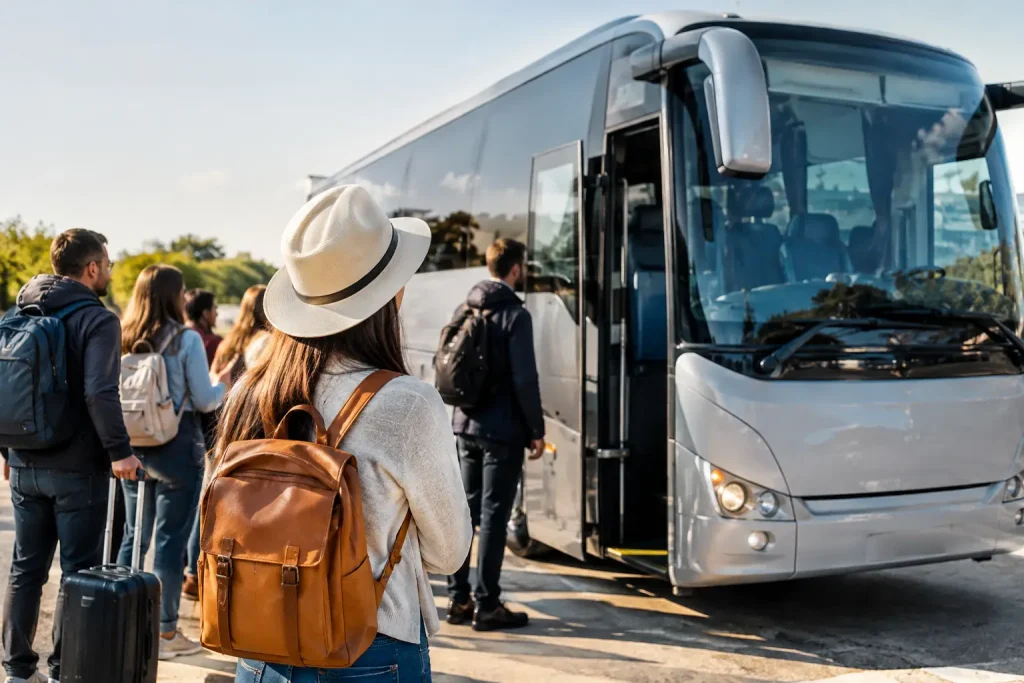
A day trip can be remembered for the right reasons: the excitement on departure, time spent together and an easy journey home. Or it can be defined by late arrivals, split-up groups and uncertainty over where everyone should be. Knowing how to plan group day-trip transport turns the travel itself into a calm, comfortable part of the occasion rather than a logistical distraction.
Whether you are arranging a corporate outing from Birmingham, a family celebration, a school reunion or a tour of the Cotswolds, the fundamentals are the same. Start early, build the itinerary around real journey times and choose a transport partner that treats punctuality and passenger comfort as priorities.
Start with the day, not the vehicle
The first question is not, “How many seats do we need?” It is, “What does a successful day look like for this group?” Confirm the destination, the reason for travelling, the number of passengers and any non-negotiable timings before requesting transport.
A wedding party may need a polished arrival at a specific venue entrance. A corporate group may need quiet, comfortable travel before an important meeting or team activity. A family group heading to the coast may value room for pushchairs, picnic bags and a relaxed return after a long day. These details shape the vehicle, collection plan and timetable.
Set out the day in order: collection, departure, comfort break if needed, destination arrival, any onward movements, return collection and final drop-offs. Share a clear version with your transport provider from the outset. It avoids assumptions and makes it far easier to identify pressure points before the day arrives.
How to plan group day-trip transport around realistic timings
A reliable itinerary leaves room for real life. Traffic around city centres, motorway delays, roadworks, event-day congestion and the time it takes for a full group to board can all affect a schedule. Planning to arrive exactly at the start time is rarely a luxury experience. Planning to arrive 15 to 30 minutes early often is.
Work backwards from the time the group needs to be at the destination. Add the expected journey time, then include a sensible buffer. For longer journeys, account for a comfort stop and confirm whether the venue has a preferred coach or minibus drop-off point. Historic towns, busy attractions and city-centre hotels can have access restrictions that are easy to overlook.
Collection time also deserves care. If passengers are being picked up from multiple locations, each stop adds more than driving time. There is time to pull in safely, load luggage, welcome passengers and allow for someone running a few minutes behind. In many cases, one central collection point is the most efficient and relaxed option. Where several pick-ups are essential, arrange them in a logical route rather than trying to accommodate every address individually.
Return travel needs the same attention. Agree a precise meeting point that passengers can recognise, particularly at large venues, racecourses, festivals or tourist destinations. Specify a return departure time, but consider whether the group needs flexibility. A fixed departure suits a corporate itinerary; a family celebration may benefit from a short collection window if the venue schedule could overrun.
Choose the right vehicle for the group experience
Capacity matters, but it is only the starting point. Booking a vehicle that holds the exact number of passengers can be practical for a short, light-travel journey. For a longer day out, or when people are carrying luggage, shopping, equipment or mobility aids, extra room can make a noticeable difference.
A premium minibus is often an excellent choice for smaller groups who want direct access and a more personal feel. A coach suits larger parties, giving everyone the chance to travel together rather than coordinating several cars. Keeping the group in one vehicle protects the timetable, reduces parking complications and lets guests enjoy the social side of the journey from the first mile.
Ask about the features that affect comfort on the day. Air conditioning, clean and well-presented interiors, reclining seats, luggage capacity and onboard facilities can be especially valuable for longer routes. If passengers have particular accessibility needs, state them early. Good planning is inclusive planning, and the right arrangement should allow every guest to travel with dignity and ease.
It is also worth considering the impression the vehicle will make. For a client event, wedding or special occasion, transport is part of the presentation. A smart, professionally maintained vehicle and a courteous driver set the tone before the group has reached the venue.
Give your driver the information that matters
The driver should receive a practical itinerary, not just a postcode. Provide collection addresses, contact names and telephone numbers, passenger numbers, desired arrival time, return arrangements and any booked stops. Mention venue access instructions, gate names, loading areas or local restrictions wherever available.
For trips involving restaurants, theatre performances, sporting events or timed attraction entry, include the booking time rather than simply saying the group is heading there. This gives the transport team the context needed to plan the journey carefully.
One designated trip organiser should be the main point of contact. They do not need to manage every passenger, but they should be able to make a quick decision if traffic, weather or a venue change requires an adjustment. Sharing one reliable contact prevents mixed messages and gives the whole group confidence that someone is in control.
Make boarding easy for everyone
A well-run day trip often comes down to small moments. Send passengers their collection location and time at least a few days before departure, then issue a short reminder the day before. Include the organiser’s contact number, what to bring and the expected return time. People are far more likely to be punctual when they know exactly where they need to stand and when.
Encourage guests to arrive 10 to 15 minutes before departure. This is not about making people wait unnecessarily; it is about allowing the group to board without rushing and enabling the vehicle to leave on time. For larger groups, a simple passenger list can help the organiser confirm that everyone is present before departure.
If the trip includes older relatives, young children or guests unfamiliar with the area, be specific. Name the side of the station, the hotel entrance or the landmark near the collection point. “Outside the venue” is rarely precise enough at a busy location.
Protect the budget without reducing the standard
The cheapest transport quote is not always the best value. A lower figure may not reflect waiting time, extra mileage, parking, tolls, multiple pick-ups or changes to the agreed itinerary. A clear quotation should make it easier to understand what is included and where additional charges could arise.
Be honest about the plan from the beginning. If the group may stay later, make an extra stop or need a different return location, raise it before booking. Last-minute changes are sometimes unavoidable, but early discussion gives your provider the chance to offer a sensible solution rather than forcing a rushed compromise.
There is a balance to strike. A tightly planned itinerary can keep costs focused, while a little contingency protects the quality of the day. For most groups, paying for the right vehicle, appropriate journey time and a dependable service is better value than dealing with missed reservations, parking stress or guests arriving tired.
Check the details a week before departure
A final review prevents avoidable surprises. Confirm the passenger count, collection time and address, destination access, itinerary, luggage requirements and main contact number. Reconfirm any special requirements, including mobility support, child seats where relevant or room for large items.
Check the destination too. Some attractions require pre-booked coach parking, while others use designated drop-off slots or have restrictions at certain times. If the day involves more than one venue, ensure every address and movement is included. A transport partner cannot deliver a polished service if key information arrives only when the group is already on board.
For organisers across the West Midlands, working with an experienced local operator also brings practical insight into busy routes, city-centre access and the realities of regional collections. Zen Travels approaches every booking with the same focus: luxury travel, professional care and a journey that feels properly organised from departure to return.
The best group day trips feel effortless to passengers because someone has quietly planned the details well. Give the journey enough time, choose comfort over false economy and communicate clearly. Then, when the doors close and the group sets off together, everyone can focus on the day ahead.