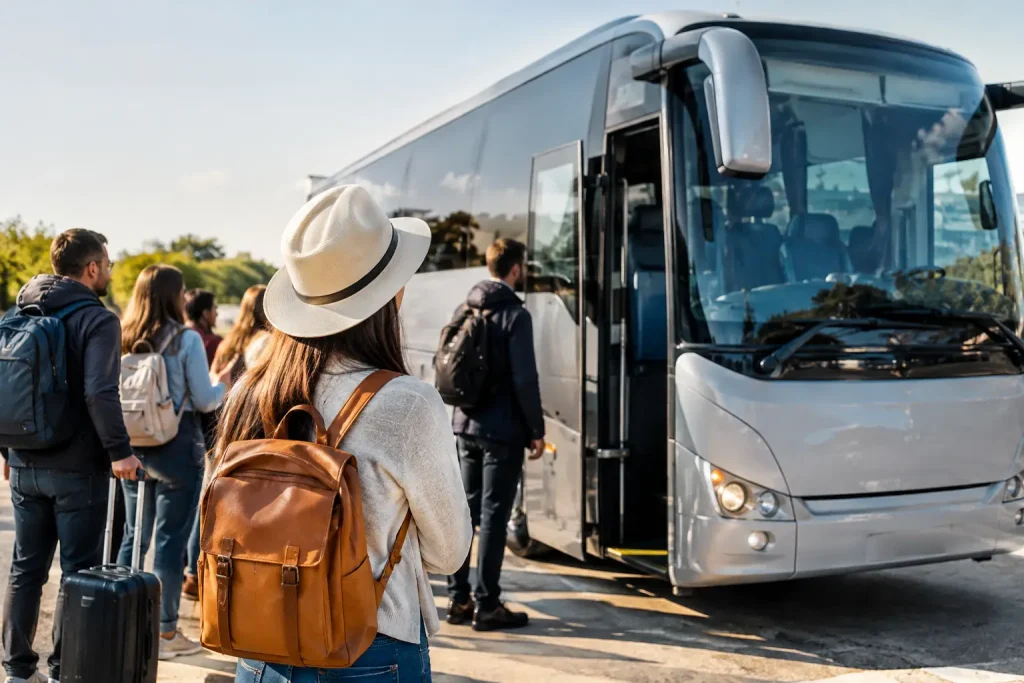
A European group trip can begin brilliantly or badly before anyone has left the West Midlands. A missed document, an unrealistic transfer time or a coach that does not suit the group can turn an exciting itinerary into a stressful one. This guide to European group travel is designed to help organisers make confident decisions, whether planning a corporate retreat, wedding celebration, school-style cultural tour, family holiday or private group getaway.
The difference is rarely the destination alone. It is the quality of the planning around it: how the group moves together, where breaks sit in the day, what happens at borders, and who is responsible when plans change. Luxury travel is not simply about a well-presented vehicle. It is about giving every passenger the confidence that the journey has been considered properly.
Start with the purpose of the trip
Before choosing cities or comparing travel times, define what the group needs from the journey. A business team travelling to a conference will value punctual arrival, quiet time on board and a clear collection plan. A wedding party may need generous luggage space, flexible timings and a vehicle that feels appropriate for the occasion. A leisure group might prioritise sightseeing, comfort on longer stretches and enough time to enjoy each stop without feeling rushed.
This first decision shapes every other part of the itinerary. A group travelling from Birmingham to Paris for two nights can usually keep the plan focused and relaxed. A multi-country tour through France, Belgium, Germany and the Netherlands needs more careful pacing, especially where hotel check-in times, city access rules and daily driving limits are involved.
Be clear about the non-negotiables. These may include a fixed event start time, accessible travel needs, a preferred crossing, space for musical instruments or sports equipment, or an early return to the UK. When these priorities are set at the outset, the transport plan can support the experience rather than merely fit around it.
Build an itinerary that respects real travel time
Maps make Europe look closer than it feels from a coach seat. The journey is part of the holiday or event, so travel times should include more than the distance between two postcodes. Allow for passenger boarding, comfort breaks, traffic around major cities, border processes, ferry or Channel Tunnel timings, hotel access and time for luggage to be unloaded.
A practical rule is to avoid planning a major activity immediately after a long travel day. If a group is due to arrive in Amsterdam, Bruges or Paris in the late afternoon, a relaxed dinner or hotel check-in is often a better choice than timed attraction tickets. Delays are not guaranteed, but a well-built itinerary leaves room for ordinary road conditions without putting the whole group under pressure.
For tours with several stops, limit the number of hotel changes where possible. Repeated packing, loading and checking in can make even a luxury trip feel tiring. Two or three nights in one base may offer a better experience than moving every day, particularly for families, older passengers or groups attending an event.
Plan rest stops as part of the experience
Comfort breaks are not wasted time. On long European journeys, they give passengers time to stretch, refresh and regroup. Choose stops with suitable facilities, and brief the group clearly on departure times. A five-minute delay from several passengers can quickly become a late arrival at the next reservation.
It also helps to decide how meals will work on travel days. A group may prefer a planned stop at a quality service area, a pre-arranged restaurant near the destination, or free time on arrival. The right option depends on the schedule, budget and group profile.
Choose the right vehicle and service level
Vehicle choice affects comfort, presentation and the overall mood of the trip. A minibus can be ideal for a smaller executive group, close family party or airport transfer, while a full-size coach offers the capacity and luggage space needed for larger tours, wedding guests and extended holidays.
Do not choose solely by passenger numbers. Consider luggage volume, mobility requirements, the length of each travel day and whether the group will carry additional items such as exhibition materials, pushchairs, golf clubs or formalwear. A vehicle that is technically large enough may still feel crowded if every passenger has a large case.
For longer continental journeys, passengers notice the details: clean interiors, comfortable seating, climate control, professional presentation and a courteous driver who understands the schedule. These are not extras when a group is spending several hours together. They are central to arriving composed and ready to enjoy the destination.
A private coach also keeps the group together. There is no need to coordinate multiple hire cars, manage separate fuel costs or wait for people who have taken a wrong turn. For organisers, one clear point of contact and one coordinated departure plan can remove a great deal of unnecessary administration.
Documents, borders and passenger information
Every passenger is responsible for carrying valid travel documents, but the organiser should create a clear checking process well before departure. Passport validity rules, visa requirements, travel permissions and entry conditions can vary by nationality and destination. Requirements can also change, so confirm the latest official guidance for every country on the itinerary, including transit countries.
Collect passenger names exactly as they appear on travel documents. Check emergency contact details, dietary requirements, mobility needs and any relevant medical information that passengers are comfortable sharing for travel planning purposes. Keep this information secure and provide it only to those who genuinely need it.
It is wise to remind the group that border checks can take time. Passengers should keep passports accessible, follow driver and terminal instructions, and avoid packing essential medication or documents in luggage that may be difficult to reach during a crossing.
For corporate groups and event organisers, appoint a trip lead as well as a deputy. They can manage headcounts, share updates and make decisions if a passenger is delayed or an itinerary adjustment is needed. This small step brings order without making the trip feel overly formal.
Budget for the whole journey, not just transport
A clear budget helps prevent awkward surprises later. Transport is a significant part of European group travel, but it sits alongside accommodation, crossings, road charges, parking, city access, meals, attraction entry, guide services and contingency spending.
The cheapest-looking plan is not always the best value. A distant hotel may reduce the nightly rate but add substantial daily driving, parking costs and lost sightseeing time. Several small vehicles may appear flexible but can create additional fuel, toll and coordination costs. Equally, a premium coach service may reduce the pressure on the organiser by providing a more comfortable, reliable and polished journey for everyone.
Ask for clarity on what is included in transport arrangements and discuss the full itinerary before confirming. A professional operator can identify practical considerations early, such as restricted coach access near historic centres, suitable drop-off points or realistic timings for a cross-Channel journey.
Make communication simple for the group
A well-informed group is easier to manage and more likely to enjoy the experience. Send one concise travel pack before departure with pick-up location, departure time, luggage guidance, passport reminder, itinerary highlights, hotel details and a contact number for the trip lead.
On the day, passengers need certainty rather than constant messages. Confirm where the coach will collect them, when boarding closes and what they should do if they are running late. During the trip, short updates about the next comfort stop or expected arrival time help everybody feel looked after.
For groups departing from Birmingham, Coventry, Wolverhampton or elsewhere across the West Midlands, a properly planned private collection point can be far easier than asking guests to arrange their own connections. It is especially valuable for early starts, formal occasions and groups travelling with luggage.
Give the journey the attention it deserves
The most memorable group trips often have a relaxed rhythm. Passengers know where they need to be, the itinerary leaves room for real life, and the transport feels like a considered part of the occasion. That requires planning, but it does not need to feel complicated when responsibilities are clear.
Zen Travels approaches European coach and minibus travel with this standard in mind: professional service, punctual coordination and a level of comfort that lets the group focus on the destination. Start early, allow sensible time between commitments and choose travel arrangements that reflect the importance of the people on board. The journey should set the tone for everything that follows.